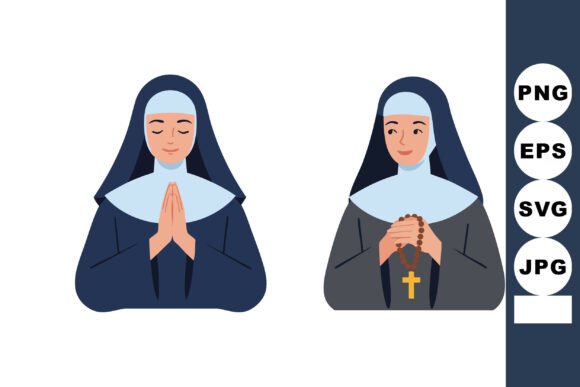
Two Praying Nuns in Religious Habits
As an experienced embroidery designer and product reviewer, I’ve had the chance to evaluate countless machine embroidery designs, from whimsical cartoon characters to intricate floral motifs. When I first opened the digital file for Two Praying Nuns in Religious Habits, it was clear this one stood out—not just for its theme, but for how it felt on the fabric. The design exudes a quiet reverence, with two nuns in traditional habits kneeling in prayer, eyes closed, holding a cross necklace. It’s not flashy, but it carries a sense of peace and spiritual symbolism that feels both timeless and intentional.
A Quiet Statement in Stitched Form
The layout is balanced and symmetrical, which makes it visually appealing even before you begin stitching. The figures are proportionally well-structured, avoiding overly exaggerated features while maintaining enough detail to feel authentic. The use of color—though subtle—is thoughtful. The habits are rendered in soft, muted tones, while the cross adds a pop of contrast without overwhelming the scene. This kind of harmony is essential when considering how the design will translate into real-world projects like sweatshirt embroidery or handmade products.
What I appreciate most about Two Praying Nuns in Religious Habits is its adaptability. It doesn’t scream for attention, but it holds space where needed. For instance, if I were designing a custom embroidered patch for a boutique religious apparel line, this illustration would fit perfectly. Its peaceful demeanor could complement a wide range of products, from nursery decor to holiday gifts. However, its visual character also means it works best in contexts where subtlety is valued over boldness.
Real-Life Application: A Custom Tote Bag Project
Let’s imagine a practical use case: creating a custom tote bag for a small shop specializing in personalized gifts. The design is centered, so it looks natural on a rectangular surface. The ZIP file includes SVG, EPS, JPG, and PNG formats, which is helpful for both digital embroidery files and mockup creation. The image itself is clean and ready to be converted into stitch paths, though—as always—I’d recommend testing it on scrap fabric first.
I would start by checking the thread colors against my chosen fabric background. Since the original illustration uses light hues, it may not stand out as much on darker materials. If I’m working with a deep navy tote, I might need to adjust the thread palette to ensure visibility. The stitch density appears moderate; there are areas of fill stitch for the bodies and satin stitch for outlines, which should hold up well on medium-weight cotton or canvas. But on stretchy or thin fabrics, I’d expect some distortion unless proper stabilizer is used.
One thing I noticed is that the details in the hands and faces are delicate. These won’t show up clearly if the hoop size is too small or if the fabric texture is rough. So if I were using this on a curved surface, like a cap or hat, I’d likely simplify the design or scale it down carefully to avoid losing clarity. For a tote bag, however, it’s ideal—especially if the customer wants something meaningful yet understated.
Customer Reactions and Gift Appeal
In terms of giftability, this design has broad appeal. It speaks to faith, devotion, and tradition, making it suitable for customers seeking personalized gifts such as baby items, wedding favors, or holiday decorations. As an Etsy seller or craft fair vendor, I’d consider this a strong candidate for a handmade product line aimed at niche markets like Catholic gift shops or spiritual retreat centers.
However, it's important to note that the religious nature of the design might not suit every audience. While many people appreciate symbolic imagery, others may find it too specific or sensitive. Always consider your target market and how they might perceive the design assets you choose to feature. This isn’t a design you want to misplace—it needs the right context to resonate.
Where to Use with Care
- Small hoop sizes: The design’s level of detail may be lost if scaled too small.
- Textured or stretchy fabrics: Could distort the fine lines and facial expressions.
- Dark fabric backgrounds: May require a complete rethinking of the thread palette.
- Curved surfaces (e.g., caps): The symmetry and composition work better on flat areas.
- Frequent washing: High-density areas might wear faster without reinforced backing.
For these reasons, I’d recommend using this illustration on stable, non-stretch materials like quilting cotton, twill, or felt. And for any project involving repeated washes, make sure to test the durability of the stitch density and secure all elements properly.
Visual Clarity and Branding Potential
When I tested a printable mockup of the design on a pillow cover, the overall look was elegant. The nuns’ postures conveyed calm and sincerity, which can enhance the perceived value of a finished product. In branding scenarios, this could work well for small shop merchandise or commercial embroidery for a spiritual-themed store. Just keep in mind that for brand consistency, the design should be used alongside other visuals that share the same tone and style.
On light-colored fabrics, the design shines with clarity. On dark ones, especially if the thread colors aren’t adjusted, it can lose definition. That said, if you’re targeting a minimalist aesthetic, this could actually work in your favor—a black-and-white version of the design would still retain its emotional impact and could easily be incorporated into a neutral-toned collection.
Design Notes for Embroidery Professionals
- Test on scrap fabric first: Especially if planning to sell the finished product commercially.
- Check thread color contrast: Consider swapping lighter shades for white or pastel threads if using on dark materials.
- Review stitch density: Areas around the cross and the habits have moderate coverage, but dense fills near the necklaces might need reinforcement.
- Confirm hoop size: If you're working with tight spaces, be prepared to simplify or crop the design.
- Inspect small details: The facial expressions and hand positions are delicate and may not render perfectly on all machines.
- Use proper stabilizer: A tear-away or cut-away option can help maintain shape and reduce puckering.
- Consider licensing: Before selling digital embroidery files or finished goods, confirm whether the design allows commercial use.
These notes aren’t just suggestions—they’re necessary steps for ensuring that your final product looks professional and meets customer expectations. Whether you're an apparel decorator or a creative entrepreneur, the success of your embroidery project hinges on these small but critical choices.
Final Thoughts
Two Praying Nuns in Religious Habits is more than just another graphics download—it’s a versatile and emotionally resonant machine embroidery design that can elevate a variety of handmade and commercial projects. From personalized sweatshirts to holiday gift tags, it brings a sense of grace and intentionality that stands out in today’s fast-moving craft market.
But don’t rush into using it without testing. Take the time to understand how it behaves on different materials, under various lighting conditions, and across different product types. With the right preparation and placement, this illustration can become a valuable part of your creative toolkit, adding depth and meaning to your craft business offerings.