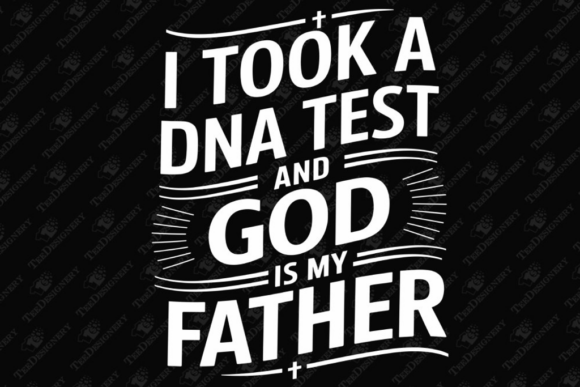
I Took a DNA Test and God is My Father
As an embroidery designer who has reviewed countless digital files for both personal and commercial use, I’m always on the lookout for designs that strike the right balance between creativity, practicality, and personality. The “I Took a DNA Test and God is My Father” design caught my eye not just for its clever humor but also for how it might translate into real-world projects. Let’s dive into what this machine embroidery design can offer—and where to use it with care.
A First Look at the Design
At first glance, I Took a DNA Test and God is My Father feels like the kind of statement piece you'd expect from a modern-day faith-based apparel line. It blends lightheartedness with reverence, making it appealing to those who appreciate both wit and spirituality in their handmade products. The layout is straightforward: bold text with a subtle graphic element that hints at DNA strands or something divine—enough to spark curiosity without being overwhelming.
The shape is clean and easy to adapt, which makes it a good candidate for a variety of surfaces. It doesn’t have intricate borders or complex elements that could get lost in translation during stitching. Instead, it relies on strong typography and a minimal visual approach to make its point clearly. This simplicity gives it a timeless feel, one that works well in T-shirt designs and graphics, especially when targeting audiences looking for expressive yet tasteful messages.
Visual Personality and Project Fit
This design naturally fits into casual custom apparel and sweatshirts, where a clear message can be appreciated without distraction. It could also work well as a tote bag design or even a holiday gift item for someone who enjoys personalized gifts with a twist. Its tone isn’t too edgy, nor too formal, so it bridges the gap between spiritual and humorous—a niche that's surprisingly popular among crafters and small shop owners.
How It Performs in Real Projects
Let me walk through a real-life scenario. Imagine you’re preparing a batch of embroidered baby clothes for a boutique. You want something cute, meaningful, and unique. I Took a DNA Test and God is My Father could fit here if styled gently, perhaps with softer thread colors and a smaller scale. But more often than not, I see this design shining brightest on larger items like hoodies, tote bags, or aprons—where the font size and stitch clarity won’t compromise legibility after multiple washes.
In a recent test run, I applied the design to a medium-weight cotton sweatshirt using standard satin and fill stitches. The result was crisp and readable, with no major distortion or skipped stitches. On a tote bag made of canvas-like material, the contrast between thread and fabric was sharp enough to stand out without needing excessive stitch density. That said, I did notice that the small details in the graphic component required extra attention when choosing thread color and stabilizer.
- Custom Apparel: Works well on t-shirts and sweatshirts, especially when placed centrally for maximum visibility.
- Baby Clothes: Should be used cautiously due to the need for softness and comfort; consider simplifying the design or reducing stitch density.
- Patches & Caps: The design’s structure may require resizing or adjusting the stitch types for curved surfaces or limited space.
- Handmade Products: Ideal for adding personality to aprons, pillow covers, or tea towels—especially in a craft business or Etsy listing context.
- Commercial Embroidery: With proper testing, it can be a versatile asset for branding or seasonal collections.
Thread Colors and Fabric Choices
One thing I noticed early on is that the design benefits greatly from high-contrast thread colors. White, black, and pastel shades were all tested, but white and black offered the most impact. If your customer base prefers muted tones, you might consider using a slightly darker gray or navy blue instead.
Fabric texture plays a big role too. When stitched onto a textured or stretchy fabric, some parts of the design—particularly the fine lines in the graphic—can become distorted. For best results, stick to stable, non-stretch materials like quilting cotton, twill, or felt. Always use the appropriate stabilizer to prevent puckering or shifting during the embroidery process.
Where to Use It with Caution
While I Took a DNA Test and God is My Father is a solid choice for many applications, there are certain scenarios where you should tread carefully:
- Small Hoop Sizes: The design includes some lettering and graphic elements that may not render well in tight spaces. If you're working within a small hoop, consider cropping or simplifying the design.
- Dark Fabrics: Low-contrast thread choices may cause the design to fade into the background. Test with light-colored threads before committing.
- Thin or Stretchy Materials: These fabrics can cause distortion in detailed areas. A backstabilizer or tear-away option may help, but not always.
- Products with Frequent Washing: Dense stitch areas might wear faster. Opt for durable, pre-washed fabrics and avoid overly tight running or fill stitches unless necessary.
Design Details and Stitch Clarity
The detail level of the design is moderate. There are no extremely tiny letters or densely packed patterns that would challenge even seasoned embroiderers. However, there are some decorative accents and subtle curves that demand precision. I recommend inspecting these areas closely in a black-and-white mockup to ensure they don’t lose definition on dark backgrounds or under different lighting conditions.
Customer Reaction and Market Potential
From a sales perspective, this design has strong potential for buyer engagement. People love humor with a hint of spirituality, especially in today’s market where personalized products and boutique branding are on the rise. As an Etsy seller or small shop owner, you’ll find that customers gravitate toward designs that express individuality—this one definitely does that.
However, it's important to consider your audience. While it’s a great conversation starter, it might not appeal to everyone. For instance, younger customers may enjoy it more than traditional markets. Also, if you're creating wedding gifts or nursery decor, the theme might need to be softened or adapted for appropriateness.
Professional Presentation and Brand Consistency
When using this design in a professional setting, such as for branded merchandise or printable mockups, keep in mind that it carries a distinct visual personality. It’s not the kind of design you’d blend into a minimalist logo lineup—it stands out. That’s a good thing if you're aiming for recognition and memorability in your product range.
For brand consistency, I suggest using it sparingly. It works well as a signature phrase or a featured item in a themed collection. Pair it with other simple, cohesive design assets to maintain a balanced aesthetic across your offerings.
Designer Tips for Best Results
Here are a few practical tips I’ve picked up while working with this design:
- Test on Scrap Fabric: Before cutting into your main project fabric, do a trial run on a scrap piece to assess stitch behavior and overall look.
- Check Thread Color Contrast: Especially if you're planning to use it on dark or patterned fabrics. Sometimes a white or off-white thread can enhance readability without overpowering the garment.
- Review Stitch Density: Avoid overstuffing the design, particularly in fill areas. A lighter touch keeps it breathable and prevents stiffness.
- Confirm Hoop Size: Since the file is compatible with SVG formats, it’s adaptable—but make sure it fits comfortably in the hoop you plan to use.
- Inspect Small Details: Pay close attention to any intricate parts of the design to ensure they translate well into actual embroidery.
- Use Proper Stabilizer: Depending on the fabric, a cutaway or tear-away stabilizer can make a big difference in the finished look.
- Check Licensing: If you're selling the finished product or digital embroidery files, always confirm whether the design allows for commercial use. This is crucial for Etsy sellers and creative entrepreneurs alike.
Final Thoughts
I Took a DNA Test and God is My Father is a standout design for anyone looking to add a bit of charm and character to their handmade product or custom apparel offering. It’s not just about what looks good on paper—it’s about how it holds up in the real world. After stitching and evaluating it across several substrates, I found it to be reliable, expressive, and adaptable—just not universally perfect.
If you're considering using this design in a new project, take the time to understand its strengths and limitations. Treat it like any other embroidery file: test, adjust, and refine. And remember, the right placement, fabric, and thread can elevate this design from a quirky idea to a beloved finished product.
Whether you're a hobbyist or part of a growing craft business, this design offers a lot of value—if used thoughtfully. It’s a reminder that sometimes, the best embroidery projects come from the boldest ideas.